DRS Resonance / Agriculture
It all starts
with the water.
A farm-scale invitation to map, test and document ELFET-informed water applications across storage, irrigation and the orchard—before any wider implementation.
Chemical-free agriculture. Nothing added.
The technology
From geometry to a working field.
ELFET—Electrical Field Entrainment Technology—states that geometric patterns can be translated into encoded audio- and field-based programmes. Materials are conditioned in a dedicated resonance chamber, then evaluated in defined farm applications.
This is not an alternative to agronomy. It is a controlled research approach that sits alongside normal farm management, food safety and traceability systems.
ELFET states this technology is intended for evaluation and field research. It does not promise crop, shelf-life, animal-health or financial outcomes, and it does not replace professional agronomic, veterinary, food-safety or medical advice.
A practical model
Three deliberate steps.
Define the pattern
Geometric forms are represented as programme inputs within the DRS/ELFET technical framework.
Condition the material
Discs, mats, seals or other agreed materials are conditioned inside the resonance chamber.
Test in context
The selected material is placed in a defined farm, water, growing or packhouse environment for comparison.
Water first
Start at the source.
Follow it to the line.
Water is the practical starting point for an agriculture conversation: identify the source, map storage and distribution, then decide what can be compared under normal farm conditions.
For a compatible dual 10,000 L (10kL) tank configuration, precision-manufactured 304 / 316 kitchen-grade stainless-steel hardware is deployed at a calibrated ratio of one suspended hollow resonance tube for every 2000 L of water (5 per 10kL tank). Each tank houses five slim suspended hollow stainless-steel tubes hung from the lid into the water column, wrapped in an active toroidal field. A galvanised pump skid circulates source water through both tube arrays and out to the orchard feed line. Because the resonance tubes are hollow, water flows freely through and around the conditioned field. This is a site-design approach—not a substitute for filtration, dosing, irrigation maintenance, water testing or agronomic advice.
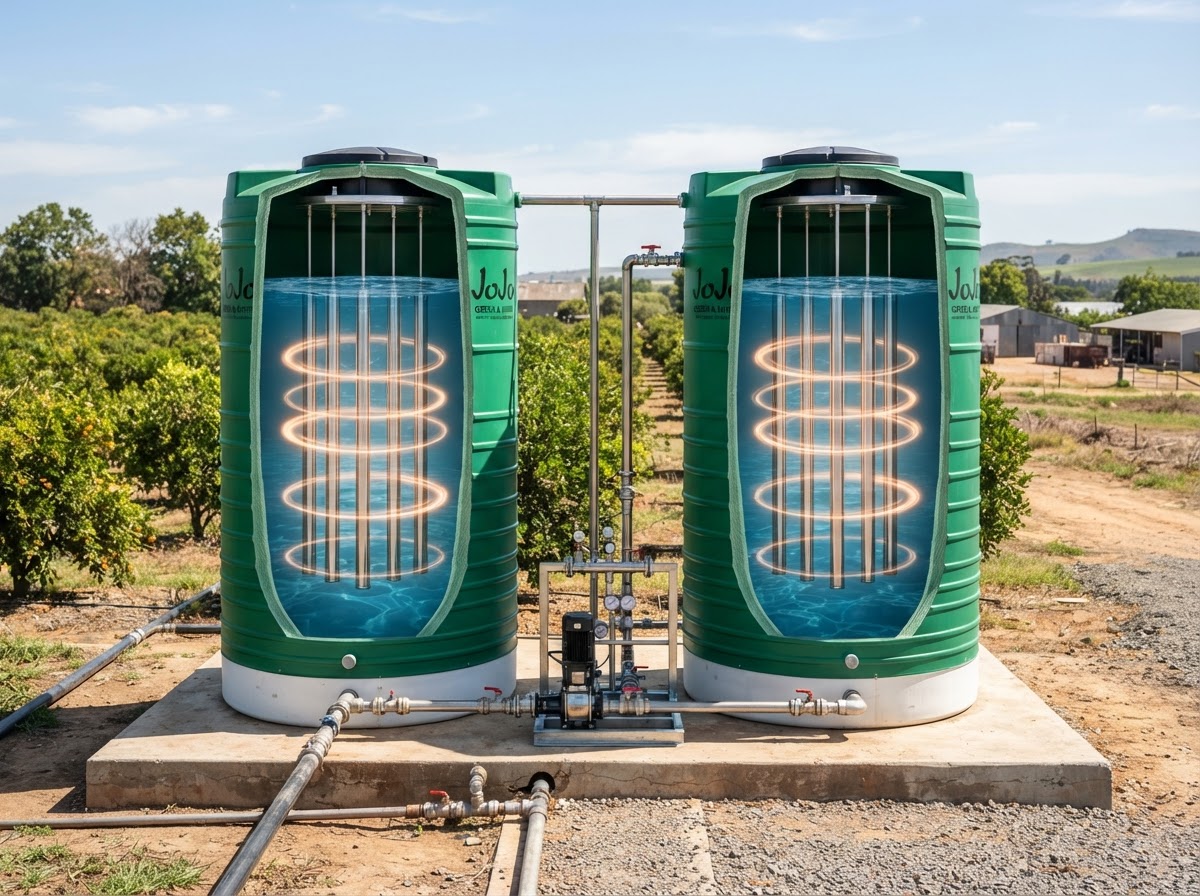
Two aligned JoJo water tanks, each housing five slim suspended hollow stainless-steel resonance tubes (1 tube per 2000 L) hung from the lid into the water column. The tanks are plumbed in series so water passes through both tube arrays before the irrigation line distributes to the orchard. 304 / 316 kitchen-grade stainless steel — grade selected for the operational environment.
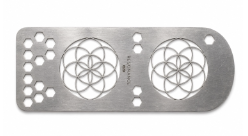
Hardware specification (304 / 316 Kitchen-Grade SS) • Ratio: 1 tube per 2000 L
Two aligned 10 000 L (10kL) JoJo tanks, each housing five suspended hollow stainless-steel resonance tubes (1 per 2000 L) wrapped in a coherent toroidal field, circulated by a galvanised pump skid feeding the orchard irrigation line. Grade selection tailored to operational environment.
AGRICULTURAL STATION / DUAL 10 000 L (10kL) TANKS • PUMP SKID & ORCHARD FEED LINE • 10 SUSPENDED SS TUBES (1 PER 2000 L) • TOROIDAL FIELD
Sacred Geometry · Laser Cutwork
316 SS Resonance Plate
Interactive 3D preview of the precision laser-cut openwork matrix. Drag to orbit, scroll to zoom, hover a node to inspect the geometric lattice.
The sacred-geometry openwork is laser-cut straight through the 316 kitchen-grade stainless-steel plate. Water flows freely through the matrix of apertures and radial spokes, carrying the coherent geometric signature into the conditioned field — no mechanical resistance, no chemical input.
Resonance Frequency State
Grounding Earth resonance — slow, deep toroidal envelope.
Orchard implementation
Galvanised chains & toroidal fields.
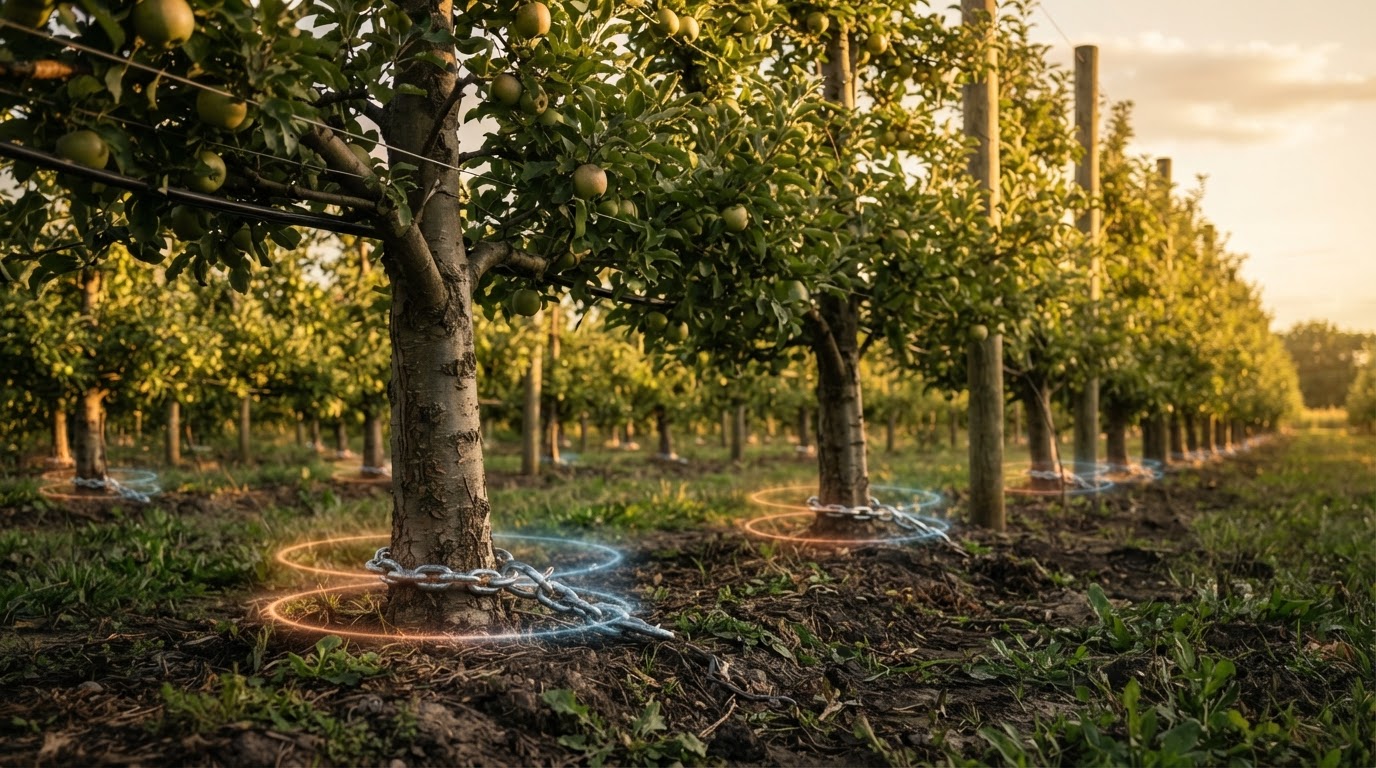
Where an orchard installation is deployed, heavy galvanised resonance chains are fitted directly around the bases of selected tree trunks. These chains act as grounding antennae and physical anchors for the ELFET® geometric harmonic programmes.
Each tree base anchors an energetic toroidal field—a donut-shaped vortex envelope extending through the root zone and upward into the canopy. Use the pulse controller to select a resonance frequency state and watch the toroidal field breathe and rotate in proportion — a real-time visualisation of the harmonic envelope structuring water molecules entering the tree's vascular cambium.
Deployment Ratio
≈ 5 flowforms / 10 million litres
Scale beyond the tank / Large Source-water Dams
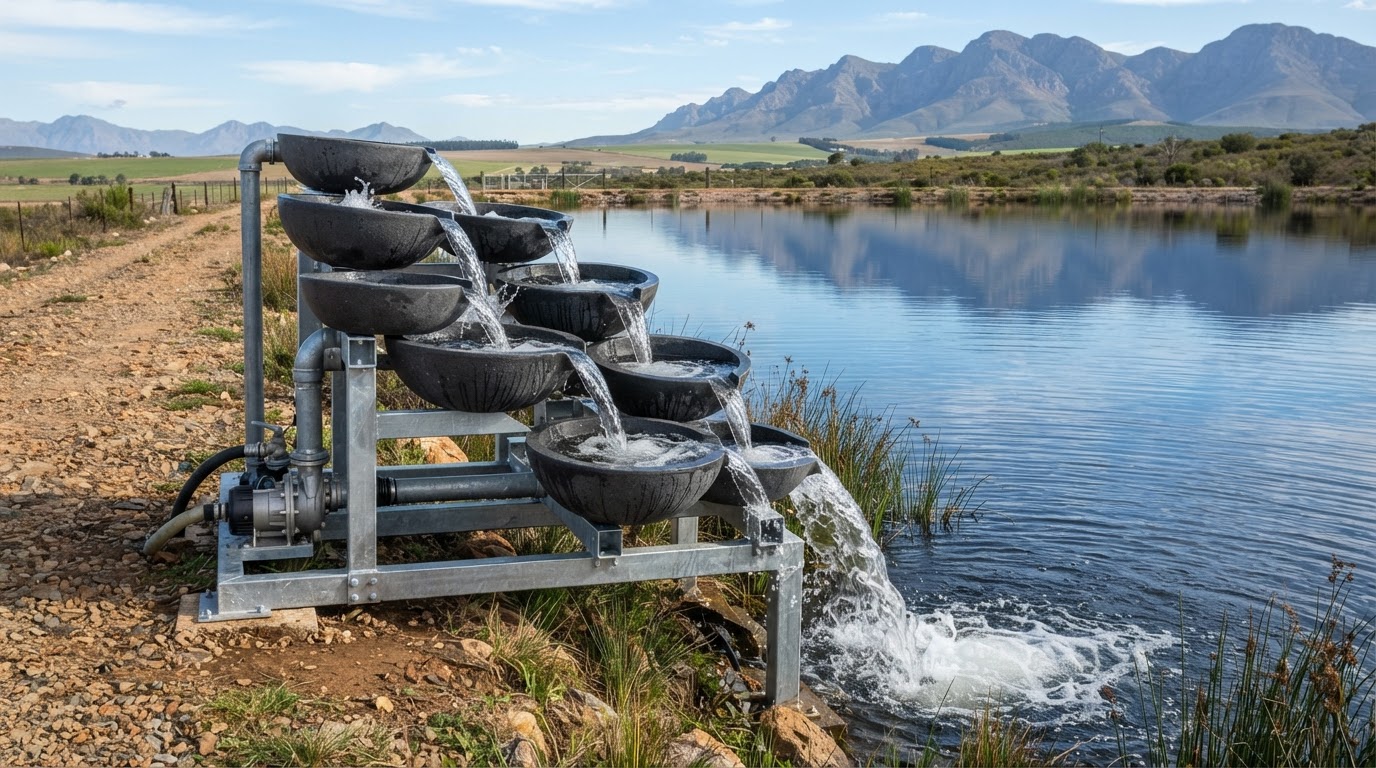
Flowform venturi steel stillages with cascade bucket vortex flow.
For large farm dams, we utilise flowform venturi steel stillages mounted along the embankment fitted with sculpted cascade plastic flowform buckets. As bulk water cascades vertically down through each graduated bucket chamber, it generates a vigorous, rhythmic figure-eight lemniscate and swirling vortex flow straight into the dam body.
Deployment scales directly with volume — approximately 5 flowform units per 10 million litres of dam capacity — ensuring full-volume oxygenation and structuring of the incoming water before it reaches main irrigation pumps, amplifying biological coherence, destratifying source water, and prepping the volume naturally without chemical additives.
Multi-tier Cascade Buckets
Sculpted flowform plastic buckets inducing rhythmic alternating vortex surges.
Venturi Steel Stillage
Heavy-duty galvanized steel stillage framing anchored firmly at the dam embankment.
Vortex Oxygenation
Natural aeration and physical water structuring directly at bulk source entry.
Zero Chemical Dosing
100% mechanical, passive geometric hydrodynamics with zero electrical consumables.
Volume Scaling
≈ 5 flowform units per 10 million litres — proportionate, modular deployment.
Provisioning around the dam
Adjacent flowform tanks, scaled to volume.
Set the dam capacity and the schematic provisions the flowform venturi stillage units required at the 5-per-10-million-litre deployment ratio — positioned around the embankment so vortex flow enters the main body directly.
Dam-side provisioning
Adjacent flowform stillages around the dam.
Flowform venturi steel stillages are positioned around the dam embankment so conditioned, vortex-aerated water flows directly into the main body. The deployment ratio scales with volume — set the dam capacity and the schematic provisions the required unit count.
Flowforms
5
Per 10M L
5
Dam Volume
10M
Provisioning model: ≈ 5 flowforms per 10 million litres. Final deployment is site-specific — embankment geometry, head pressure and inflow rate are validated on-site.
Interactive hydrodynamics
The figure-eight vortex, in real time.
Each flowform cascade bucket forces water through a rhythmic lemniscate (figure-eight) path. Adjacent tiers mirror the loop direction, producing an alternating vortex field. Orbit the 3D stillage, scrub the flow rate, and watch oxygenation and turnover respond as the droplets trace the curve.
Flowform Hydrodynamics
Alternating lemniscate vortex aeration.
Each cascade bucket is itself an ELFET-resonated vessel — the flowform plastic is chamber-conditioned so a toroidal harmonic field wraps every tier. Bulk water is then forced through a rhythmic figure-eight (lemniscate) path; adjacent tiers mirror the loop direction, creating an alternating vortex field that oxygenates and structures the full incoming volume before it reaches the dam body.
Oxygenation
0%
Turnover
0.00/min
Vortex Field
0%
Dissolved Oxygen · DO saturation
Conceptual hydrodynamic model. Reported aeration and structuring effects depend on dam geometry, head pressure and flow volume — site-specific validation required.
Reported growth response
Treated vs control development rate.
Historical pitch-deck observations record a sustained developmental gap between conditioned-water and ambient-water plantings across the season. The interactive chart below models that gap as an indexed biomass curve — toggle the crop, scrub the exposure, and read the seasonal uplift.
Growth Telemetry / Interactive
Comparative Development Rate — Treated vs Control
Indexed biomass development over a 16-week season. Curves are illustrative models built from reported pitch-deck observations — not measured yields, and not a promise of repeatable crop, quality or financial outcomes.
Field Coherence Exposure
100%Drag to morph the treated line from the control baseline toward its full-exposure conditioned state.
Control wk16
153idx
Treated wk16
235idx
Final uplift
+54%
Season AUC gain
+45%
AUC — area-under-curve integrates total seasonal biomass. A higher AUC reflects sustained development rather than a single late spike.
Biomass index — a dimensionless normalised growth reference (100 = planting baseline), not a kg/ha yield figure.
All figures are illustrative simulations constructed from reported observations and are presented as trial hypotheses. ELFET does not promise crop, quality, yield or financial outcomes and does not replace agronomic advice.
Field comparison / Same soil · Same season
From the water to the tree — the full treatment cycle.
Conditioned water leaves the 10kL station, flows the irrigation line, and enters the orchard where galvanised resonance chains at each trunk base anchor a toroidal field through the root zone. The fence-line below records the canopy-density and vigour differential observed between conditioned-water and ambient-water rows.
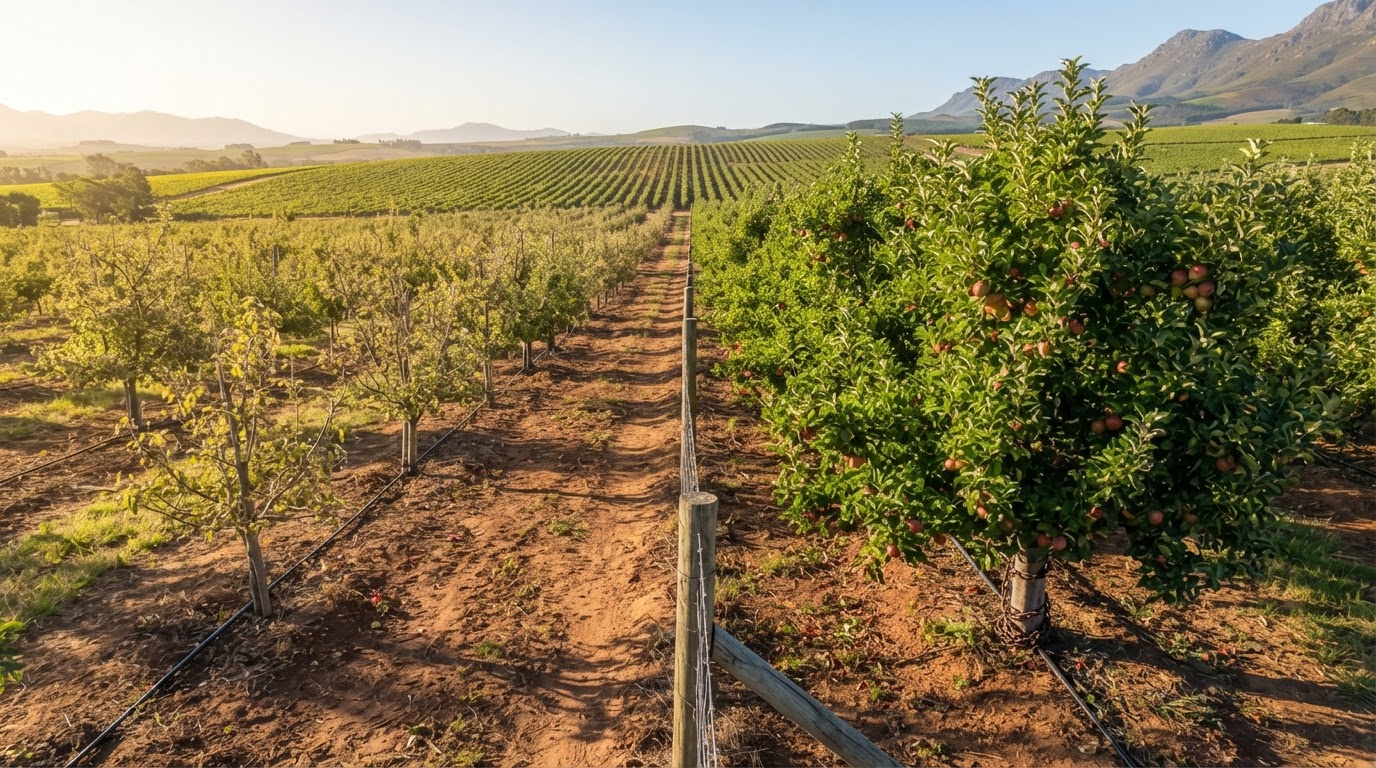
Fence-line comparison / Galvanised base chains · Toroidal root field
Each treated tree carries a single heavy galvanised resonance chain wrapped at the trunk base, grounding the ELFET® toroidal field through the root zone and into the vascular cambium.
Source water
Dam / borehole
Flowform cascade oxygenates and structures bulk source water before pumping.
Tank station
Dual 10kL · 5 units each
316 SS Tree-of-Life plates (Tank 1) + hollow 304 SS tubes (Tank 2) in toroidal field.
Irrigation line
Drip / micro
Conditioned water carries the geometric signature through the distribution line.
Tree base
Galvanised chain
Resonance chain anchors the field through the root zone into the vascular cambium.
Canopy response
Observed vigour
Reported canopy-density and biomass uplift vs the ambient control row.
Cycle metrics are illustrative of the reported treatment pathway and observed vigour differential — not measured yields or a promise of repeatable crop, quality or financial outcomes. ELFET does not replace agronomic advice.
Cellular uptake / Scientific level
Where the water meets the cell.
Any field response ultimately traces back to how water crosses a membrane. The panel below models the membrane-transport and metabolic channels reported to shift under conditioned-water irrigation — aquaporin flux, transpiration, ATP turnover and nutrient uptake — animated as live vesicle transit through the cell wall.

Cellular Uptake / Interactive
Membrane Transport & Metabolic Efficiency
Animated vesicle transit shows structured-water molecules passing through aquaporin membrane channels from the apoplast into the symplast. Bars compare baseline control tissue against conditioned-water tissue at the current exposure setting.
Conditioned-water Exposure
100%Drag to morph the treated-channel bars and vesicle density from the control baseline toward full conditioned-water exposure.
Mean metabolic uplift
+56%
across 4 transport channels
Aquaporin flux
µmol·m⁻²·s⁻¹
78
+86%
Transpiration rate
mmol·m⁻²·s⁻¹
4.7
+52%
ATP turnover
nmol·g⁻¹·min⁻¹
264
+42%
Nutrient uptake
% of feed
88
+44%
Aquaporin flux, transpiration, ATP turnover and nutrient uptake are illustrative indices modelling reported observations. Not a laboratory measurement and not a biological, agronomic or medical claim.
What grows under Resonance water.
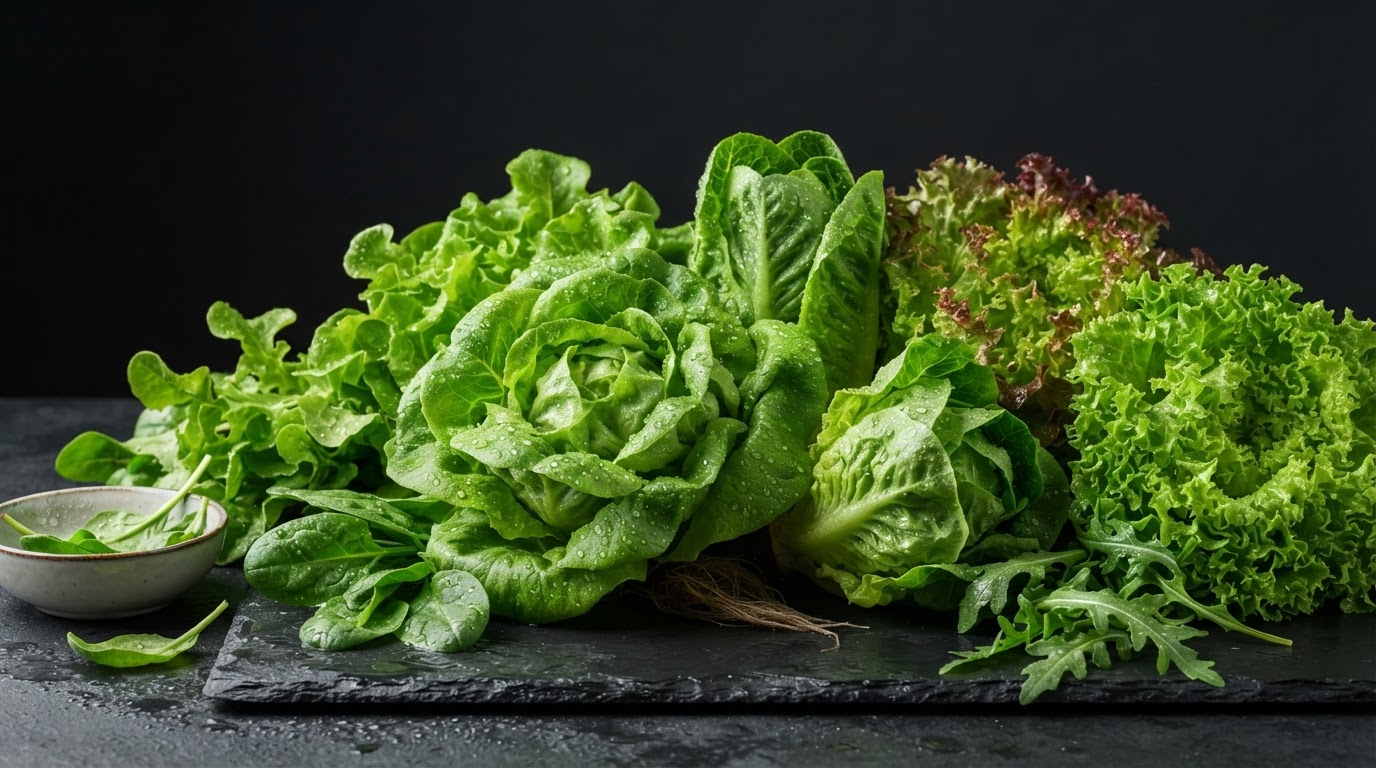
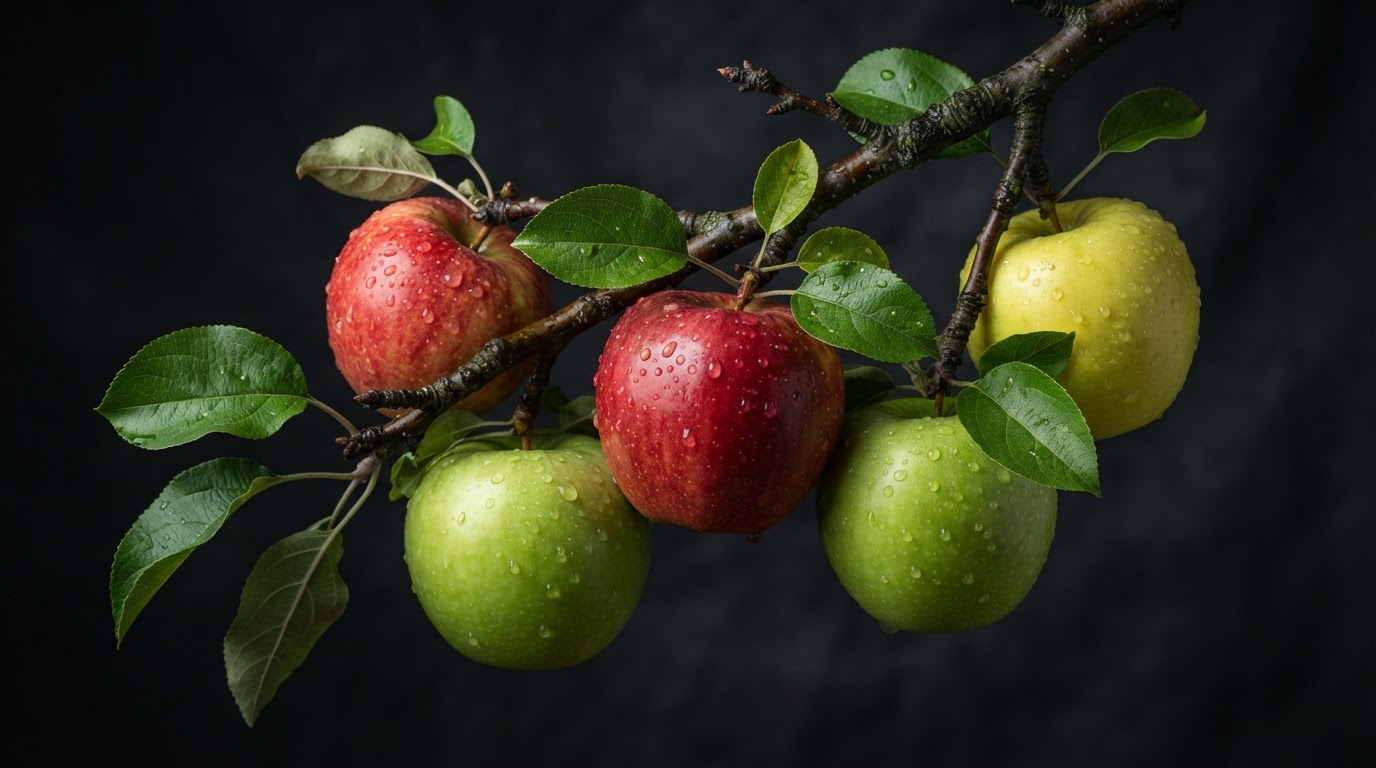
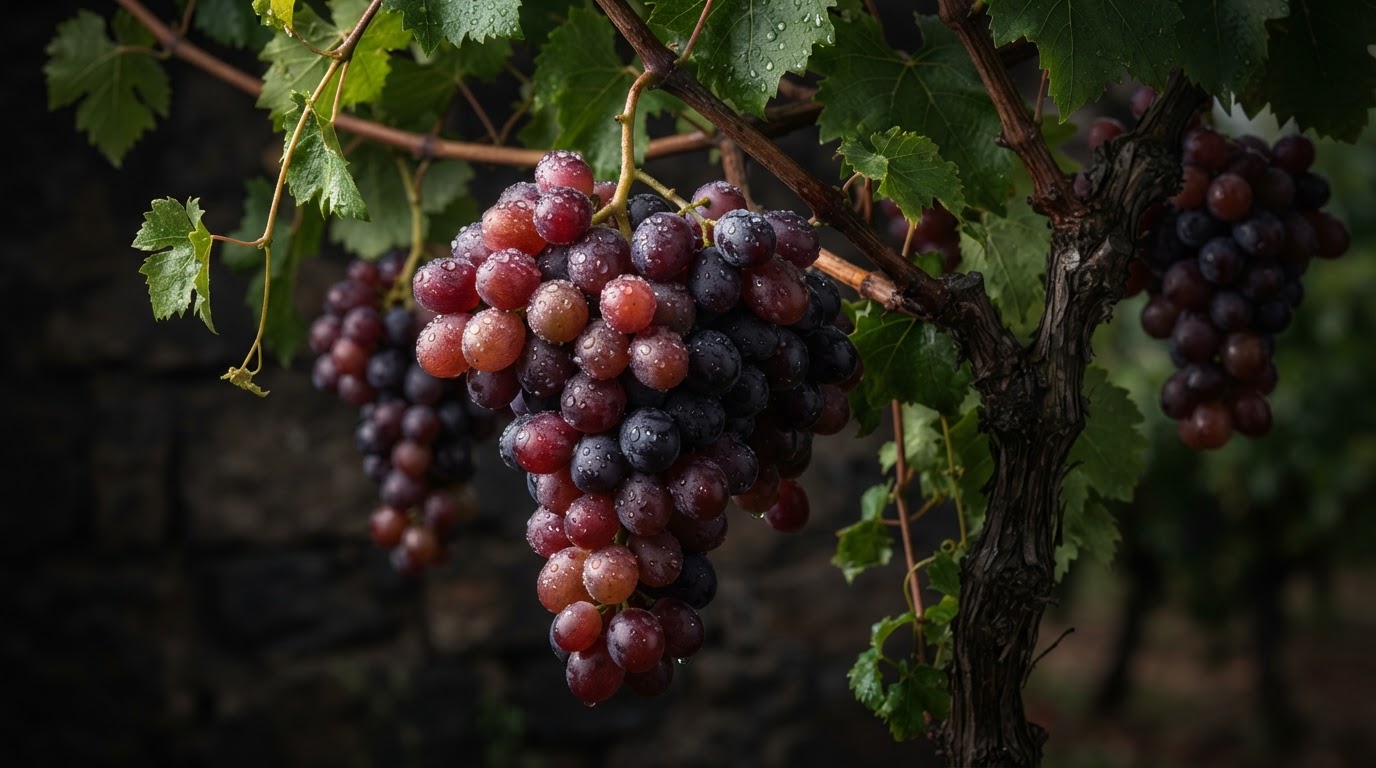
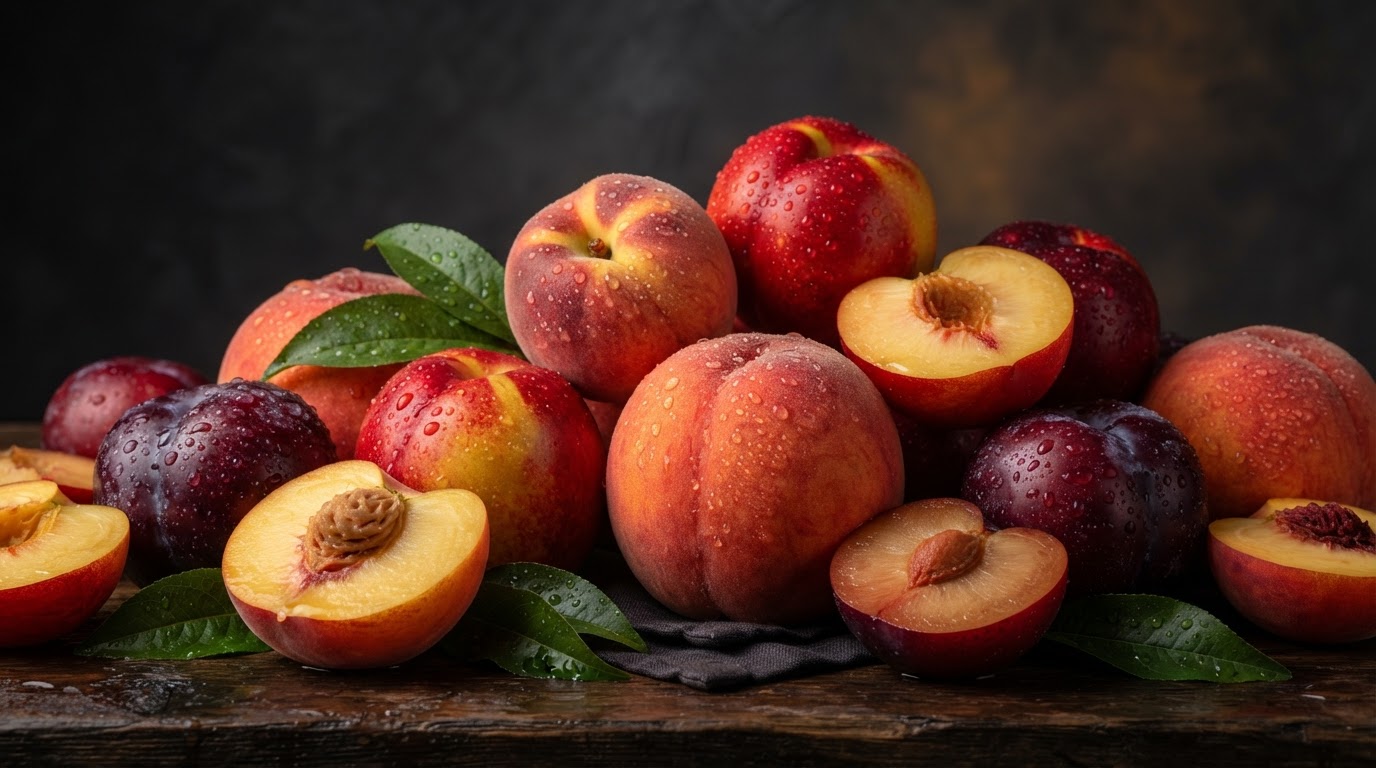
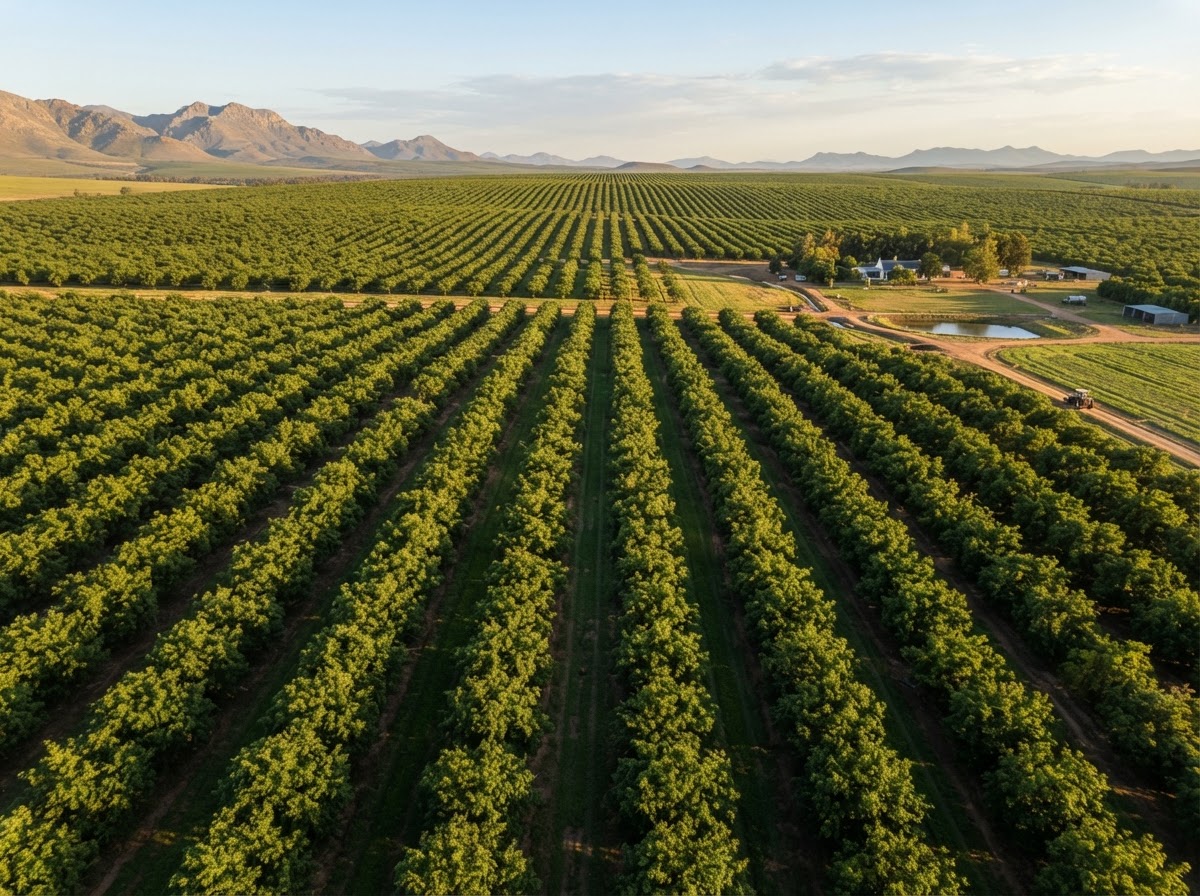
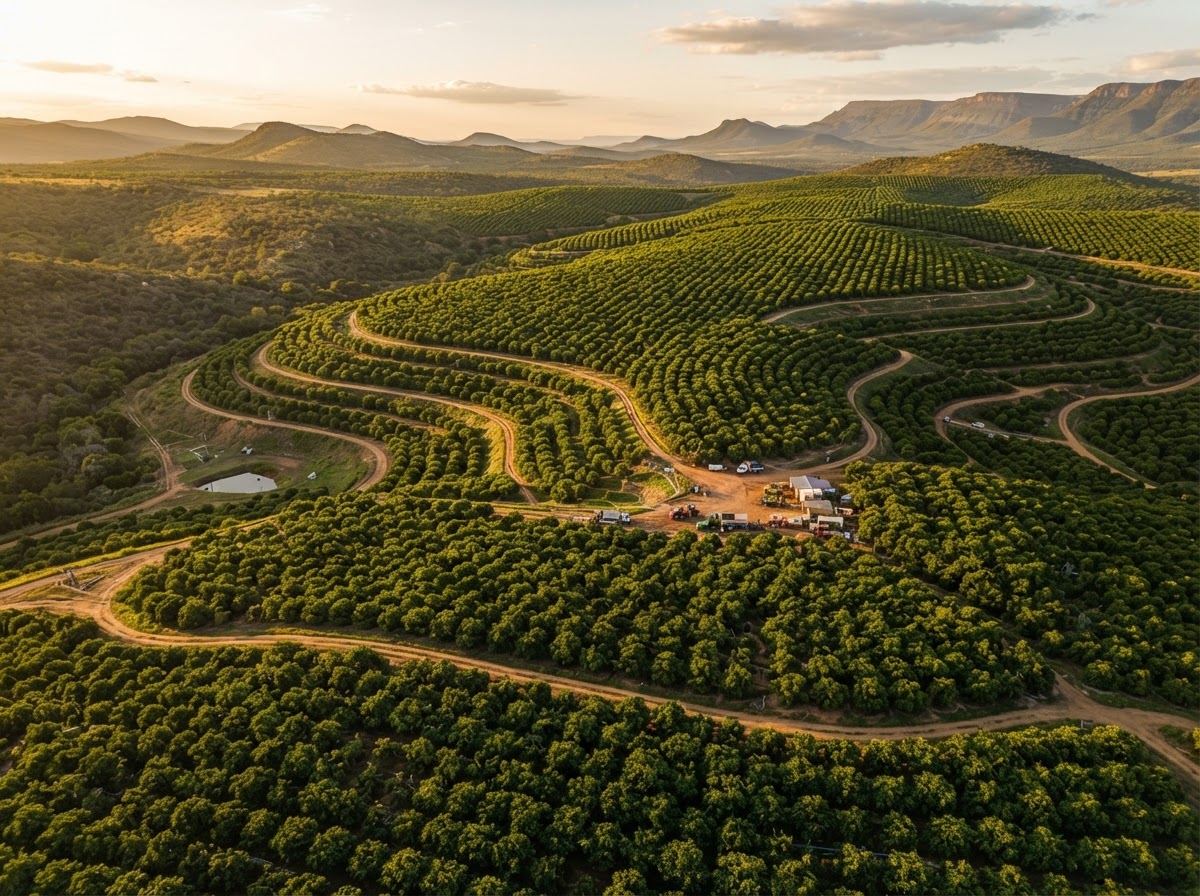
From the Ceres apple valleys to the Orange River vineyards — South Africa's main fruit, berry, vegetable and orchard crops where structured water can be applied at irrigation, wash and cold-chain stages. Drag the strip or tap a crop to explore.
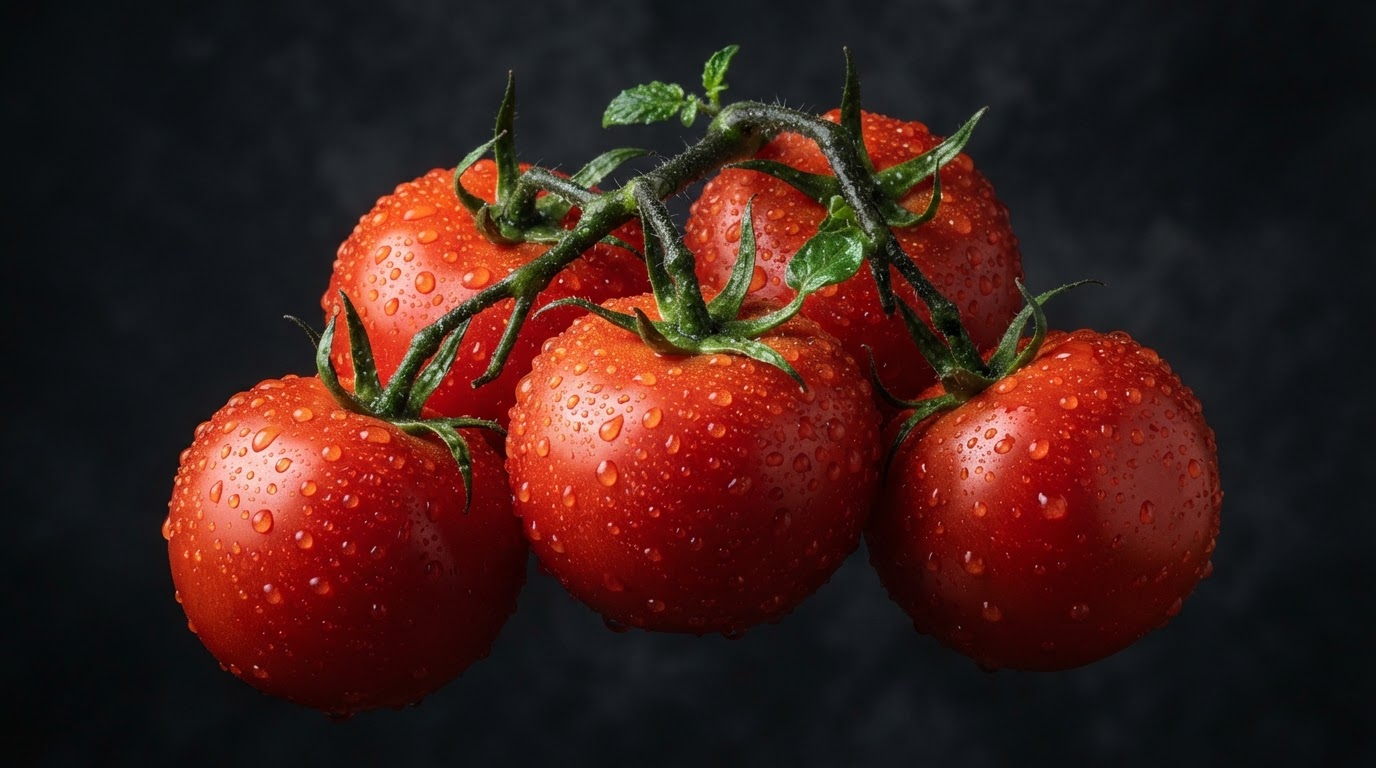



Tomatoes
Irrigation-grown and packhouse-handled tomatoes — Resonance-structured water supports firmness, shelf-life and reduced post-harvest moisture loss across the cold chain.
Figures reflect reported observations on Resonance-structured water in similar crop environments and are presented as hypotheses for locally designed, independent farm-scale testing — not guaranteed outcomes. Crop response varies by cultivar, soil, season and management practice.
What the pitch deck shows
Reported observations — ready for independent testing.
The supplied pitch material records historical observations across water, seedlings, crop growth and post-harvest environments. These are useful hypotheses for a locally designed trial, not promises of a repeatable result.
Comparative flower and produce examples motivate a structured review of water handling and post-harvest quality.
Historical germination and root-development comparisons inform candidate nursery and propagation pilots.
Documented crop comparisons are treated as reported observations that require crop-, site- and season-specific validation.
The framework can be scoped around irrigation, seed, growing environments or freshness materials—not all at once.
Build the evidence with us
Ready to trial Resonance on your farm?
We invite selected farming partners to establish an agreed baseline, retain a comparison area and measure observations under real South African operating conditions.
Plan & support
Initial assessment, agreed materials, installation planning and ongoing support through the pilot.
Baseline & comparison
Agreed measures, photographs, observations and, where suitable, independent testing.
A controlled setting
An uninterrupted trial area, normal practice, accurate production information and scheduled access.
Guided enquiry
Request a pilot in four steps.
Tell us your sector, environment and contact details — we'll frame a practical baseline and comparison plan.
Request a Pilot
Step 1 / 4
Which application are you exploring?
Free download
Lead magnet
The ELFET Field Trial Protocol.
A structured framework for running your own site-specific Resonance trial — baseline, intervention, control, measurement and review. Enter your email and we'll send it straight to your downloads.
Your email is captured securely by DRS. We'll only use it to share trial resources and follow up on your interest.
Agriculture enquiry
Bring the question. We’ll shape the pilot.
Tell DRS about the crop, operating environment and constraint you would like to understand.